A Practical Fog-Light Check Before Driving a Vintage GMC Coach
A restored coach may be described as having “new fog lights,” yet that says nothing about how the lamps behave after dark. For a 1973–1978 GMC Motorhome, a useful GMC fog lights check begins while the vehicle is parked and ends with an informed decision about whether professional attention is needed. Our archived vehicle descriptions can document that an upgrade was reported; they do not certify the wiring, mounting or beam pattern of an individual coach.
Begin in daylight with a walkaround
Park the coach securely with the engine off and inspect the lamps without removing covers or touching electrical connections. Look for cracked lenses, trapped moisture, loose-looking brackets, damaged housings and corrosion around visible attachment points. Also check whether the lamps obstruct a headlamp, front turn signal or other required light.
Stand at the front and compare both sides. If a housing appears tilted or one lens is cloudier, record the difference and photograph it. Do not assume a lamp is safe because its lens is intact.
We noted new fog lights in a historical listing for a sold 1977 GMCII. The listing did not specify the light model, switch arrangement, wiring protection or aiming result.
Check operation without entering traffic
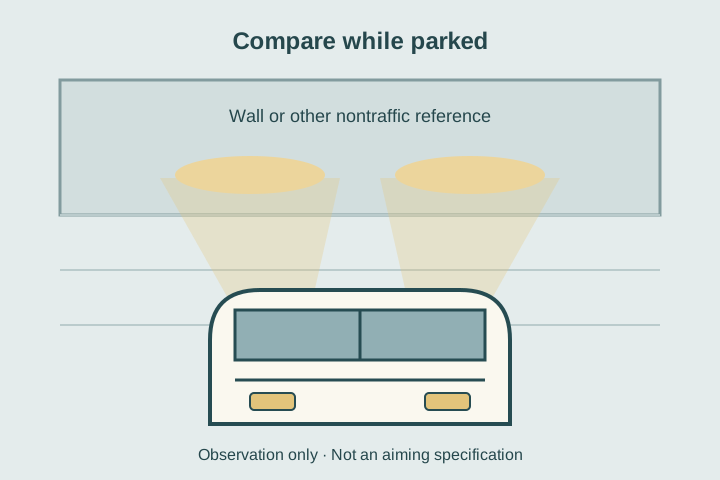
With the coach stationary in a suitable, well-ventilated location, ask another adult to observe from a safe position while the driver operates the existing controls. Confirm which switch activates the auxiliary lamps. Observe whether both lights illuminate consistently and whether turning the required headlights on or off changes their behavior.
Use a suitable wall or other nontraffic reference to note whether the two beams appear uneven. Never stare directly into a bright lamp, and avoid improvised nighttime road tests. A visibly high or scattered beam calls for a specialist to evaluate aim and glare.
Switches that work intermittently, lamps that flicker or any unusual smell should end the test. Leave electrical diagnosis to a qualified technician rather than opening a harness or experimenting with fuses.
Understand the difference from required lights
Fog lamps supplement the vehicle's lighting. They do not replace functioning headlamps or turn signals. NHTSA's guidance on auxiliary lighting explains that supplemental lamps may not impair required lighting and that individual states regulate additional aspects of fog-light use.
The federal vehicle-lighting standard addresses the effectiveness of required lamps, including potential impairment by added equipment. Whether a particular vintage installation meets applicable requirements depends on the lamp, placement, operating behavior and jurisdiction. No seller's statement that lights are new can settle that question.
A lighting specialist should review the particular equipment and the state rules for where the coach will operate.
Decide when to stop and get help
This short test card separates an observation from the next professional question. It assumes no attempt to repair the electrical system during the check:
| Observation | Stop or continue? | Question for a specialist |
|---|---|---|
| One lamp remains dark | Stop using the auxiliary lights | Is the fault in the lamp, control or protected wiring? |
| Light flickers intermittently | Stop and document the behavior | What causes the inconsistent operation? |
| Beam appears to dazzle or point high | Avoid use until assessed | Can the mounting and aim be corrected? |
| Bracket moves or lens is damaged | Do not use the affected lamp | Is the assembly secure and suitable for repair? |
A normal stationary check is only an initial screening. It cannot establish beam performance on the road or verify hidden wiring condition. Confirm a repair and any subsequent inspection before relying on the equipment for a trip.
Keep a short record with the coach
Write down the inspection date, the lamp or switch involved, what you observed and the name of any specialist who examined it. Retain the invoice and the work description after repairs.
We recommend the same discipline when reviewing a coach advertised with recently installed lighting. Clear records and a professional inspection are more useful than the word “new,” particularly before traveling after dark.